Social Media
Optimization Company Biography
Social media optimization (SMO) refers to the use of a number of social media outlets and communities to generate publicity to increase the awareness of a product, brand or event. Types of social media involved include RSS feeds, social news and bookmarking sites, as well as social networking sites, such as Twitter, and video and blogging sites. SMO is similar to search engine optimization in that the goal is to generate traffic and awareness for a website. In general, social media optimization refers to optimizing a website and its content in terms of sharing across social media and networking sites.[1]
Social media optimization is becoming increasingly important for search engine optimization, as search engines are increasingly utilizing the recommendations of users of social networks such as Facebook, Twitter, and Google+ to rank pages in the search engine result pages. The implication is that when a webpage is shared or "liked" by a user on a social network, it counts as a "vote" for that webpage's quality. Thus, search engines can use such votes accordingly to properly rank websites in search engine results pages. Furthermore, since it is more difficult to tip the scales or influence the search engines in this way, search engines are putting more stock into social search.[2][3]
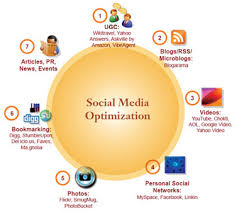
















Social media optimization (SMO) refers to the use of a number of social media outlets and communities to generate publicity to increase the awareness of a product, brand or event. Types of social media involved include RSS feeds, social news and bookmarking sites, as well as social networking sites, such as Twitter, and video and blogging sites. SMO is similar to search engine optimization in that the goal is to generate traffic and awareness for a website. In general, social media optimization refers to optimizing a website and its content in terms of sharing across social media and networking sites.[1]
Social media optimization is becoming increasingly important for search engine optimization, as search engines are increasingly utilizing the recommendations of users of social networks such as Facebook, Twitter, and Google+ to rank pages in the search engine result pages. The implication is that when a webpage is shared or "liked" by a user on a social network, it counts as a "vote" for that webpage's quality. Thus, search engines can use such votes accordingly to properly rank websites in search engine results pages. Furthermore, since it is more difficult to tip the scales or influence the search engines in this way, search engines are putting more stock into social search.[2][3]
Social Media Optimization Company
Social Media Optimization Company
Social Media Optimization Company
Social Media Optimization Company
Social Media Optimization Company
Social Media Optimization Company
Social Media Optimization Company
Social Media Optimization Company
Social Media Optimization Company
Social Media Optimization Company
Social Media Optimization Company
Social Media Optimization Company
Social Media Optimization Company
Social Media Optimization Company
Social Media Optimization Company
Social Media Optimization Company
Social Media Optimization Company
Social Media Optimization Company
Social Media Optimization Company
Social Media Optimization Company
